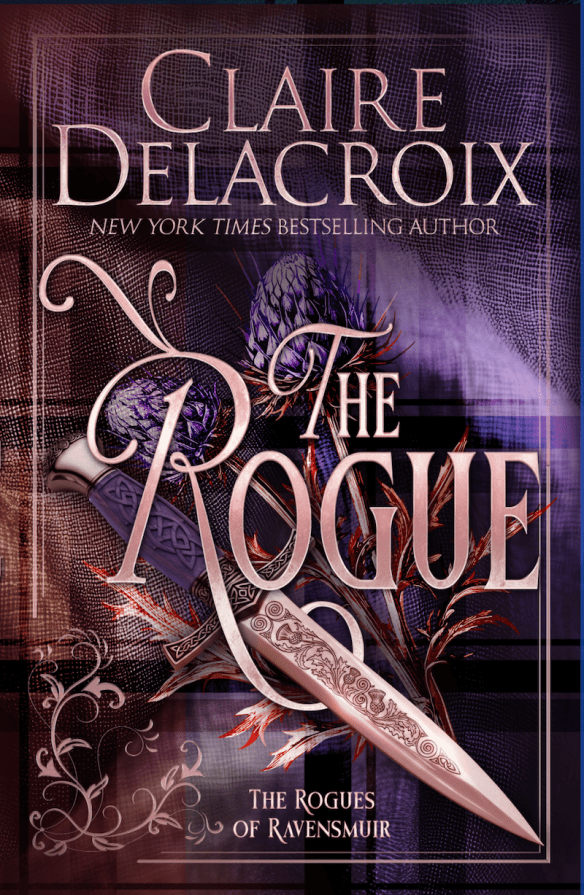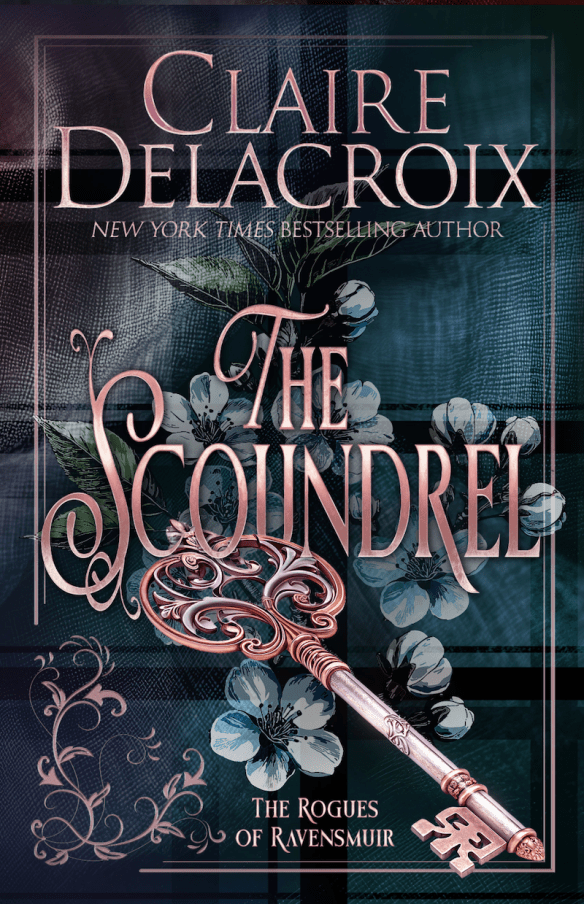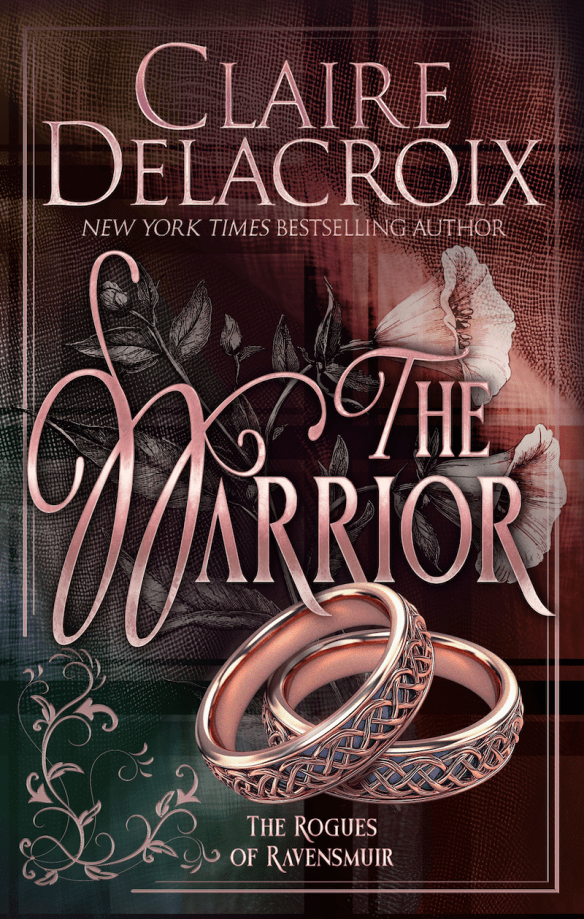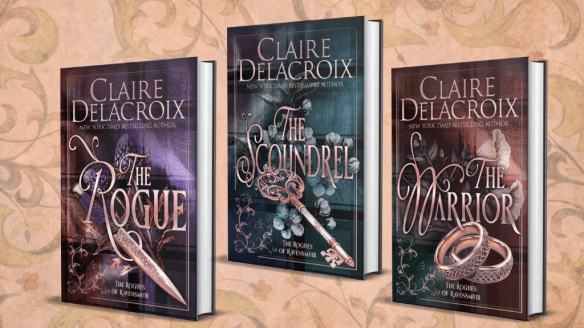
The Wolf & the Witch is 99cents!

The Wolf & the Witch, book one of my Blood Brothers series of medieval romances, is on sale for a limited time for just 99cents. If you haven’t started this series, this is a great chance to dive in!

Five star review for The Wolf & the Witch, book one of the Blood Brothers series of medieval Scottish romances by Claire Delacroix
The Wolf & the Witch, book one of the Blood Brothers trilogy of medieval Scottish romances by Claire Delacroix

Denied his rightful legacy, Maximilian de Vries devised a plan to avenge himself upon his father and see his own future secured. Allied with his two half-brothers, he descends upon ancient and mysterious Kilderrick, determined to seize the keep once promised to him, regardless of the price. A woman rumored to be a witch is the sole one bold enough to defy him but Maximilian has a solution—he will take her to wife, whether she be willing or nay, and seal his claim.

But this powerful warrior has yet to match wits with Alys Armstrong, a maiden with a thirst for vengeance and a fury that might exceed his own. Alys has no intention of capitulating to the proud and powerful rogue who stole everything from her—no matter how seductive his touch might be—and she does not share his compulsion to fight fair.

Bitter enemies from the outset, Maximilian and Alys’ match is a battle of wills. When passion flares, will either of them be able to resist temptation? And when Kilderrick itself is in peril, will they join forces to save the holding they each prize—and the unexpected love they value above all else?

Buy directly from the author at Hazel & Honeysuckle Press and have your ebook delivered via BookFunnel

Upon the Matter of Quinces

Quinces have become uncommon, at least in my corner of the world, but they are an ancient fruit. It seems their last wave of popularity was in the late nineteenth century – there are old quince trees planted on farms in this area, and the quinces from those trees can sometimes be found at farmers’ markets. The first time I bought some, the farmer in question told me he didn’t usually pick them, just let them fall and rot. Thanks to my enthusiasm, he picked about half a bushel each year and brought them to the market. I bought a lot of them. 🙂

Three years ago, I planted my own quince tree. It’s a Quince de Portugal and is self-pollinating. I also planted a second quince – one taken from an old tree of unknown variety – so they can encourage each other. The first one bloomed this year and bore twelve quinces. The other one has yet to bloom.

The flowers are really pretty.

quinch flower in Deborah Cooke's garden, 2025

Here’s the fruit forming. This was taken in July.

quinces growing in Deborah Cooke's garden, July 2025

I wasn’t sure when to pick the quinces. I ended up picking them in September, since the squirrels were getting busy in the garden and I didn’t want them to steal any.

the first 12 quinces from Deborah Cooke's tree, 2025

They sat in a bowl in the kitchen for a few weeks, slowly ripening, and eventually I washed off the fuzz to make them look more respectable.

the first 12 quinces from Deborah Cooke's tree, 2025, fuzz removed

Finally I made quince jelly. To make jelly of any kind, you first have to make the juice. I don’t peel or core the quinces, since they’re quite hard. I take off the stem, half them, then chop each half into eight pieces or so. It all goes into the pot. I cover them with water and bring them to a boil, then turn the juice down to a simmer.

This time, I simmered the quinces for about three hours. The magical thing about quinces is that the colour of the juice changes with heat – so as it simmers, it turns pink. After about two hours, I mashed the fruit and topped up the water. It was in this last hour that it turned such a vivid pink. It also began to gel.

juice from quinces from Deborah Cooke's garden

Next, I let the mixture cool. I lined a collander with a cloth and strained it through. I ended up with this jug and half of another one.

When I first made quince jelly, the recipes suggested sugar and juice be one-to-one. I found that jelly just tasted like sugar. This time, I found suggestions of .8 of sugar to every 1 of juice. I might try even less sugar next time, as it’s still pretty sweet – and I don’t think there’s any risk of it not setting up.

My yield was six jars of beautiful jelly. This is an older picture, because we’ve been eating up this batch.

Quinces and quince jelly made by Deborah Cooke

Some fruit trees bear heavily in alternate years. Was this a low year or a high year? Will there be one quince next year or dozens? I’m curious to find out.

This also got me to thinking about medieval quinces. If you search for quince recipes now, the majority of them are for jelly. You might also find recipes for membrillo, which is quince paste. Both use a fair bit of sugar – but medieval people (and certainly ancient Greek people) didn’t have the same access to cane sugar that we do. How did they eat their quinces?

The Medieval Kitchen: Recipes from France and Italy

In The Medieval Kitchen: Recipes from France and Italy, I found a recipe for Cotignac or Quince Jelly Candies. The source is Le Ménagier de Paris – I had also looked there, but this recipe isn’t included in my English translation of the work (The Good Wife’s Guide). There is nothing about quinces in Pleyn Delit either. I suspect these omissions are because quinces are less common in our times – it makes sense to include recipes people can or will actually make.

This is from page 215 to 16 of The Medieval Kitchen – the recipe itself is from Le Menagier de Paris:

“To make cotignan, take quinces and peel them, then cut them into quarters and remove the core and seeds, then cook them in good red wine and then put them through a sieve; then take some honey and boil it for a long time, and skim it; then put in your quinces and stir very well, boil long enough that the honey reduces by at least a half, then add hypocras powder and stir until it is completely cold; then cut into pieces and store.”

“This is one of the first French recipes for these quince jellies, which, as pâte de coings, would later be a specialty of the town of Orléans. Hee they are made with honey, like all the “preserves and sweets” described in Le Ménagier de Paris – and this is further evidence of the bourgeois origins of that text: its author would never have dreamed of using that precious commodity, sugar. He saves it for rather fancier purposes, such as “the Duke’s Powder”, a sweetened spice mixture. Still, this recipe is not without interest, for cooking the fruit in red wine rather than in water adds a fine color and a slightly acidic, winey flavor, which balances the sweetness of the quinces and the musky undertone of the honey.

The name cotignac is related to the words for “quince”: condougn in Provençal and mela cotogna in Italian. Etymologists tell us that this refers to the city of Cydonia (now Canae) in Crete, whose Latin name was Cotonea. In his first-century A.D. Natural History, Pliny the Elder refers to Cotonea in connection with the quince trade.”

There’s a modern version of the recipe after this, and I will try it the next time I have quinces. I’ll have to make my own hypocras, which is fun, too.

New Edition of The Crusader’s Bride in Spanish

The rights to the Spanish translation of The Crusader’s Bride (La novia del caballero de las Cruzadas) have reverted to me, which means there’s a new edition of this book out in the world. It also means that now all the books in the series are linked up in a row at the retail portals, which makes me happy. The new edition has no reviews, which makes me less happy, but it’s on sale for just 99cents and that might help.

The links have also changed for the other four books at KOBO, just FYI. They lost their reviews with the change, too. 😦

The Crusader's Bride, book one of the Champions of St. Euphemia series of medieval romances by Claire Delacroix, Spanish edition
The Crusader's Bride, book one of the Champions of St. Euphemia series of medieval romances by Claire Delacroix, in Spanish

Gaston luchaba por el deber y el honor, hasta que Ysmaine lo tentó a luchar por su amor… 

Cuando el caballero templario Gaston hereda inesperadamente los bienes de su familia, sabe que necesita una esposa y un heredero. Un matrimonio de conveniencia con una viuda que necesita ayuda es una solución práctica y la pareja de recién casados abandona Jerusalén, encargándose de la entrega de un paquete para los Templarios. Lejos de la vida que ha conocido durante años, Gaston rápidamente se da cuenta de que no está siguiendo su plan, especialmente su misteriosa esposa, cuya presencia despierta un fuego inesperado…

Ysmaine, que ha enviudado dos veces, duda de que se vuelva a casar otra vez, y mucho menos de tener un matrimonio por interés, hasta que se ve encantada por el rudo caballero que intenta defenderla. Ysmaine vuelve a casarse, no solo por su propia elección, sino con un guerrero cuyo honor admira. Está decidida a demostrarle a Gaston que el matrimonio tiene más que ofrecerles a ambos que un heredero, pero primero debe ganarse la confianza del hombre cauteloso con el que se ha casado impulsivamente… 

Ninguno de los dos se da cuenta de que a Gaston se le ha confiado el tesoro de los Templarios, y mucho menos de que alguien en su pequeño grupo tiene la intención de robar el premio a cualquier precio. En un grupo de extraños con secretos, ¿podrá Gaston atreverse a confiar en su nueva esposa? ¿Podrá Ysmaine convencer a Gaston de que le confíe lo que sabe? ¿Podrán resolver el misterio juntos antes de que el plan del ladrón se haga realidad y todo esté perdido?


Esta es una traducción al español neutral de América Latina.


Compre La novia del caballero de las Cruzadas ebook:

Multi-Author 99cent Fantasy Romance Promotion

Today’s the day for a 99cent romance promotion, featuring books with fantasy elements.

FaRoBub 99 cent sale on fantasy romance October 2025

You’ll find One Knight Enchanted on the landing page, on sale for just 99 pennies, along with 300 other books.

Visit the landing page.

Fr33 Romances Book Blast

1250 free romance reads October 2025 Romance Book Blast

Today’s the day for another free romance book blast. You’ll find The Beauty Bride and The Christmas Conquest on the landing page, along with many other free books.

This time, I’m trying something new. These series starters are free, but I’m discounting the next two titles in each series through November 8. The Rose Red Bride is just 99cents and The Snow White Bride is $2.99US or equivalent. The Masquerade of the Marchioness is 99cents and The Widow’s Wager is just $2.99US or equivalent.

Visit the landing page.