Yesterday, I told you a bit about my new Ream subscriptions. Today, I thought we’d talk a bit more about my Knights & Rogues Book Club, which will be launch at Ream beginning November 1.
Each month, subscribers will have access to four stories (mostly full-length books) as we work through my various series. This tier is like a lending library or a streaming service – subscribers have access to the content for 30 days. It’s incredible I have enough completed books to fill an entire year but there you go. LOTS of books to read!
I’m looking forward to the community forum discussions on my books and will be popping in there each week. This is still evolving but maybe we’ll make a regular Q&A or a scheduled time for me to be there. One fun thing about Ream is that it supports features like reader polls, so we can figure out what’s most appealing to everyone. I’ll also be able to share additional resources for each series, like Pinterest links, blog posts about research, character lists or family trees, so that we can immerse ourselves in that world for the month or so.
Here’s the planned schedule of books for the first year:
November 2023 – The Bride Quest (The Princess, The Damsel, The Heiress and The Countess.)
December 2023 – The Bride Quest continued (The Beauty, The Temptress and Easter at Airdfinnan and Christmas at Tullymullagh).
January 2024 – The Rogues of Ravensmuir (The Rogue, The Scoundrel and The Warrior) and the beginning of The Jewels of Kinfairlie (The Beauty Bride).
February 2024 – More Jewels of Kinfairlie (The Rose Red Bride, The Snow White Bride and The Ballad of Rosamunde) and the beginning of The True Love Brides (The Renegade’s Heart).
March 2024 – More of The True Love Brides (The Highlander’s Curse, The Frost Maiden’s Kiss and The Warrior’s Prize) and the beginning of The Brides of Inverfyre (The Mercenary’s Bride).
April 2024 – More of The Brides of Inverfyre (The Runaway Bride and The Stolen Bride) plus Unicorn Bride and Pearl Beyond Price.
May 2024 – The Champions of St. Euphemia (The Crusader’s Bride, The Crusader’s Heart, The Crusader’s Kiss, and The Crusader’s Vow.)
June 2024 – The finale of The Champions of St. Euphemia (The Crusader’s Handfast) and Rogues & Angels (One Knight Enchanted, One Knight’s Return and One Knight’s Desire).
July 2024 – Blood Brothers (The Wolf & the Witch, The Hunter & the Heiress, The Dragon & the Damsel, and The Scot & the Sorceress).
August 2024 – the time travels (The Last Highlander, The Moonstone, Once Upon a Kiss and Love Potion #9).
September 2024 – The Brides of North Barrows (Something Wicked This Way Comes, A Duke by Any Other Name, A Baron for All Seasons and A Most Inconvenient Earl).
October 2024 – The Ladies’ Essential Guide to the Art of Seduction (The Christmas Conquest, The Masquerade of the Marchioness, The Widow’s Wager and The Hellion’s Heart).
It’s possible that there will be changes as we go – will there be a fourth Rogues & Angels book by June? – so be prepared for some tweaks. Either way, you’ll read a lot of medieval romance!
Ream is a portal designed for authors to deliver content by subscription to their readers. I’ve been setting up my accounts there (one for Deborah and one for Claire) and will be launching my subscriptions in November. This makes now a good time to explain what will be happening over there.
In a way, Ream is like Patreon or Substack – or many other similar portals – in that readers subscribe to a specific tier of content provided by a creator. It might be an essay a month; it might be a chapter a week of a serialized story; it might be early access to a new book. Ream is specificially designed for fiction, though, so that (for example) it’s easy to read serialized content in order. I also like the interface. The other fun thing about Ream is that it creates a community forum behind the paywall – when you subscribe to a tier, you have access to a forum where you can discuss the story with other readers or ask questions of the author. There can also be additional content available to subscribers there, like family trees and glossaries.
There are many possibilities with a site like Ream, but I’ll be concentrating on three different strategies there.
The Book Club I have a lot of completed content and sometimes people find that daunting. My Knights & Rogues Book Club will be launch at Ream beginning November 1. Each month, subscribers will have access to four stories (mostly full-length books) as we work through my various series. This tier is like a lending library – subscribers have access to the content for 30 days. We’ll start with the Bride Quest. (I’m kind of amazed that I have enough completed books to fill an entire year!)
The Book Box Each quarter or so, I’ll offer a book box via Ream. The first one will be signed 25th anniversary commemorative hardcover editions of all six Bride Quest books. You’ll be able to sign up for the book box for a specified interval – this one will be three weeks in November – then you’ll be billed three times. The books will ship in the new year. It’s kind of an installment plan for the special editions, plus you’ll get your books signed and with goodies. These bundles won’t have as many goodies as the Kickstarter editions, just FYI, but will offer a second chance for readers to get the signed editions. (This one isn’t published to the Ream page yet.)
New Stories Under this model, you’ll get early access to a story that hasn’t been published yet. It’s a first peek! The story will be delivered in installments, like a serial, then when it’s completed, subscribers will get the ebook of that story on publication. Some authors share early drafts this way, but I’m too much of a control freak for that. The story will be done before it is delivered via Ream – subscribers will just see it early. I’ll be continuing the Ladies’ Essential Guide to the Art of Seduction this way. In December, we’ll launch with the existing books, then The Hellion’s Heart (and the rest of the series) will be available first at Ream.
How does Ream work? From the subscriber side, you have to create an account, then you have the option of setting your notifications and preferences. When you subscribe to a tier, you’ll be billed immediately for the first month. That will give you access to the available content and community forum. That day will become your billing date, and you’ll be billed every month on that date for that subscription, unless you choose to cancel it. So, subscribe to a tier today, and your billing date will be the 18th of every month. Ream takes care of all sales taxes (which I love) so it’s possible that there will be sales tax on your subscriptions on top of the tier price. The prices are set in USD.
I’ll tell you more about the Knights & Rogues Book Club tomorrow. In the meantime, have a look at my Ream page. You can follow the page for free.
You may have seen a link to this on my FB page yesterday, because I did share it there. Now I’m sharing it here. One of the backers of my Bride Quest Kickstarter campaign has blogged about the unboxing of her 25th anniversary commemorative hard cover editions. If you have questions about how we fulfill the KS campaigns, here’s a sneak peek.
Taking a character who has been a villain in one book, then making him the hero in his own book is a challenge I enjoy. It only makes sense to me that if love can conquer all, it can also reveal the hidden goodness in a character and redeem him. (I’ve never done this for a heroine, though. Hmm.) The thing is that these books, which are tough to write, invariably turn out to be among my favorites of my own books.
My first decision to do this was with Gawain, the wicked brother of Merlyn in The Rogue. Gawain was trouble but he also had a certain charm, along with his disregard for anyone other than himself. He was a clever character, raised to be the thief he was, and very good at his so-called profession. I thought of him as kind of a James Bond character, which prompted me to look deeper, since James Bond has a history that drives his choices.
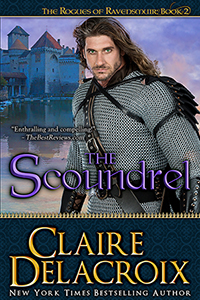
I also thought Gawain was due for a surprise. He was accustomed to things going exactly the way he planned them. What would unexpected challenges do to this confident thief? What about being bested by someone else? Enter Evangeline, an unhappy heiress determined to change her future, and prepared to do whatever is necessary to make it so—including seducing a thief and stealing a prize from him. Repeatedly. Their book is The Scoundrel. I loved these two together and how Evangeline compelled Gawain to discover his lost honor. Here’s the moment that Gawain realizes what’s happened:
It was remarkable, for I could have spent a pleasant night betwixt the lady’s thighs, but had denied my own pleasure to protect her heart.
Chivalry, which I had long believed to be dead and gone from this world unlamented, had proven to be hidden in the most unlikely of places—it had been nestled in my very marrow, and had revealed itself at a most inconvenient time.
I saw now why I had always avoided noble deeds—I had slept alone, awakened alone, been relieved of my valuables, and all because of my own misguided urge to warn the lady away from me. Gallantry, in my opinion this morn, was of less merit than most men believed.
—from The Scoundrel
I redeemed a couple of heroes on my Cooke brand next, including the happy-go-lucky and indulged youngest son in the Coxwell family, in All or Nothing. Zach has the ability to make Jen laugh, something she’s forgotten in her battle with breast cancer. She’s learned her lesson about handsome guys with easy charm, though—and how quickly they jump ship when things get tough—so Zach digs in to prove her assumptions wrong. Along the way, he learns that there’s something (or someone) he cares about after all, though Jen isn’t easy to convince. I love their story, too. 🙂
My next “villain” to be redeemed was really an outsider. Lorenzo in the Dragonfire Novels has no interest in being a dragon shifter, so doesn’t want anything to do with his kind. He’s built a life as an illusionist and he doesn’t need the distraction of the Pyr war against the Slayers. Of course, no one can deny what or who they are, and Lorenzo is faced to accept his nature when he experiences his firestorm. He has even less desire for a destined mate than to be part of the Pyr team, but when Cassie is targeted and he’s outnumbered, Lorenzo changes his mind. Their story is Flashfire.
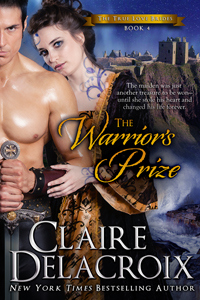
Back to my historicals, my next villain to reform his ways was Rafael in The Warrior’s Prize. In the previous book, The Frost Maiden’s Kiss, Rafael is Malcolm’s companion and fellow mercenary, a man concerned solely with his own advantage—until he sees Elizabeth, Malcolm’s sister, and loses his heart with one glimpse. She recognizes the kind of man he is, so Rafael has to change to win her hand (and convince Malcolm of his good intentions).
Rafael is prepared to win Elizabeth’s freedom from a Fae curse, regardless of the price to himself, and independent of whether Elizabeth accepts him afterward. That’s the stuff of a real hero.
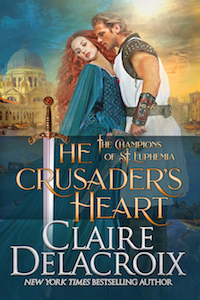
The Crusader’s Heart
Wulfe in The Crusader’s Heart was the next hero to learn the power of love. Wulfe isn’t a villain, exactly, but he is very duty-oriented in The Crusader’s Bride and becomes impatient with Gaston for being sentimental. Wulfe’s world is very black-and-white, and he’s practical to a fault. Who better to complicate his perceptions than a widow who has disguised herself as a courtesan, a beauty in need of a warrior’s aid to escape captivity and return home? Even better, Christina is clever and she surprises Wulfe with her perceptiveness. Once these two agree to combine forces, they’re unstoppable.
I love that Wulfe abandons everything he knows to seek a future he can share with Christina, and that he’s the one to surprise her in the end.
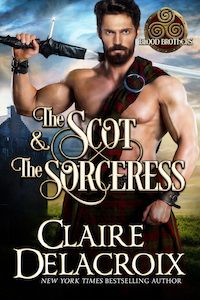
It could be argued that three of the Blood Brothers are villains redeemed by love—a former mercenary, Maximilian is no angel when he comes to Kilderrick in The Wolf & the Witch. His half-brother and fellow mercenary, Rafael, is certainly not nobly inclined before he falls in love with Ceara in The Dragon & the Damsel. But I think the greatest villain in the series is Murdoch—until Nyssa sees his truth in The Scot & the Sorceress. Nyssa, a healer, realizes that Murdoch is driven by his grief, and that his sense of honor demands that he keep his word. She not only shows him another way to keep his pledge, but asks for his help with her own quest for vengeance—along the way, we see Murdoch’s protectiveness awakened. I really love this story of the healer and the warrior, since Nyssa and Murdoch heal each other in the end.
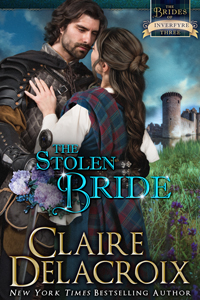
I have another villain coming due for his redemption in The Stolen Bride, publishing in December. (Writing these stories is a bit addictive, given how much I like the results!) Ramsay, the hero of this upcoming story, was the villain in The Runaway Bride, the previous book in the Brides of Inverfyre series. In that story, Evangeline, (named for her grandmother, the heroine of The Scoundrel, which brings us nicely full circle) is fascinated by the rebels in the forest who would challenge her father’s claim to Inverfyre. When Ramsay is imprisoned at Inverfyre, she boldly (and secretly) enters the dungeon to bargain with him. You can believe that he will never forget this regal beauty. The Stolen Bride begins when Evangeline leaves Inverfyre for her arranged marriage to a distant lord. Ramsay is disinclined to let her go. Evangeline has no interest in living in a forest hovel. I’m really looking forward to writing this battle of wills, and watching Ramsay change to win his deepest desire—the love of Evangeline.
There’s a little summary of my villains-turned-to-heroes, which also includes many of my favorites of my own books. Have you read them all? Do you like bad boy or troublemakers made heroes? What about villains redeemed by the power of love?
In The Scot & the Sorceress, Nyssa has blue marks on her skin. What are they? They sound like they might be tattoos, but I never call them that.
The word “tattoo” is much more recent than the Middle Ages. There are several different attributions, but let’s go with the most popular: that it comes from the Samoan word ‘tatau’, meaning ‘to strike’—because a tool was struck against the skin to make the holes that would subsequently be filled with color. The word is not noted in English until the 18th century, introduced after Captain Cook’s travels to the south Pacific—where he noted the beautiful art adorning people’s bodies in Tahiti. His account of his voyage is the first use of the word in an English source.
The art of marking the skin, though, goes back much further than this. The oldest figurative tattoos were found in 2018 on the bodies of two mummies from Ancient Egypt, dated between 3351 and 3017 BCE. I couldn’t find any pictures of them, but there are many images online of Otzi, a mummified corpse discovered in the Alps with over 60 tattoos, dated to 3250 BCE. Here’s an article at the Smithsonian showing Otzi’s tattoos and telling more about him.
My favorite ancient tattoos are those of the Princess of Ukok, a woman discovered in Siberia and sometimes called the Siberian Ice Maiden. She was buried in the 5th century BC and discovered in 1993 – she was of the Pazyryk tribe, who lives on the Eurasian Steppe, and was buried in what is now the autonomous Republic of Altai. She was between 20 and 30 years of age, and was buried with six horses, an elaborate headdress, ornaments and offerings, indications that she was a priestess and/or shaman. She had gorgeous tattoos. You can read the Wiki about her here.
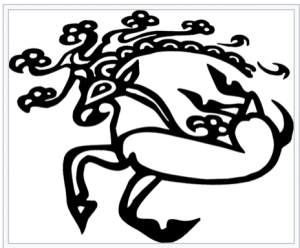
A second tomb was found in the same vicinity for a man who also had beautiful tattoos. This article is about both of thembut the first illustration shows the man’s tattoos. Scroll down to see her tattoos. The most remarkable one, for me, is the creature on her left shoulder. Here’s a drawing of it from Wiki.
There are many other peoples who have marked their skin in the past five thousand years, but we’ll look finally at the Picts, who resided in the area Fortrui—now Inverness and Moray—before the 8th century. We don’t know what they called themselves, but the Romans called them Picti from the 3rd century, which means ‘painted ones’. Some interpret this as meaning that the Picts tattooed themselves; others suggested that they painted their bodies. Blue is a common color associated with this ornamentation.
For the imagery of Nyssa’s tattoos, I took inspiration from the many carved stones created by the Picts. Although these peoples left no written records, they did leave a number of these stones, and there are common elements in their imagery. (The Aberlemno I stone is a good example.) These include serpents, the double disk and Z-rod (you can see one of these on a silver plaque in the Norrie’s Law Hoard), the mirror and comb, the so-called Pictish Beast, and insular interlace similar to what we see in other Celtic images and depictions of animals. The St. Ninian’s Isle treasure is considered the best collection of Pictish items and includes many ornamental penannular silver broaches. I chose a serpent for one of her tattoos, although there are many many possibilities here.
How did ancient people make tattoos? Presumably, they also pierced the skin then rubbed pigment into the holes. What did they use for color? It’s possible that they used woad, a blue dye derived from the plant Isatis tinctoria which was a popular dye for cloth in the Middle Ages. (Although indigo has been known as a blue dye for millennia, it was rare in Europe in the Middle Ages, as it had to be imported from much warmer climates.)
Nyssa’s tattoos are a fictional invention of my own, but they’re not that implausible. It only makes sense to me that such marks would be indicative of achievements for a seer or shaman, but that too, is part of my fictional world of The Scot & the Sorceress.



 Claire Delacroix