About Regency Marriages

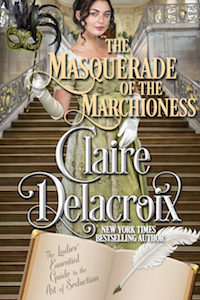
The Masquerade of the Marchioness, a Regency romance by Claire Delacroix

Yesterday, in response to a question from a reader on my ARC team, I added an author’s note to The Masquerade of the Marchioness. If you pre-ordered the book, you’ll probably get the version without the Author’s Note, so you can read it in this blog post.

The question was about the legality of Garrett marrying Penelope, the sister of his dead wife. This is against ecclesiastical law and always has been – marrying the sibling of a dead spouse, or the spouse of a dead sibling (remember Henry VIII) was considered to be consanguinity, even though technically, the couple were not blood relations themselves. It is, however, a tidy solution, when women were more likely to die in childbirth – marrying the dead wife’s sister would provide care for the existing children and some familiarity. The sister couldn’t live respectably in the house of a widower (even her dead sister’s husband) but it was likely that the children already knew her.

There were two hurdles to doing this, however: first, the would-be groom had to find a minister to perform the religious ceremony. Second, the marriage could be challenged by any “interested party” so long as both wife and husband were alive, in which case, it could be annulled or voided. Annulling the match would make their children illegitimate, which could deprive those children from inheriting.

Let’s create an example from Jane Austen’s own work. At one point, Elizabeth says to Jane: “I am determined that only the deepest love will induce me into matrimony. So, I shall end an old maid, and teach your ten children to embroider cushions and play their instruments very ill.” Let’s imagine that Elizabeth and Mr. Darcy never worked out their differences, and this scenario happened instead.

Now, some math. 🙂 If Jane married at 22 – she might have been 23 by the time of the actual marriage, but let’s go with 22 and skew younger – it would take her probably 15 years to have 10 children. It might take closer to 20, but again, we’ll skew younger. So, if she died in childbirth delivering that 10th child, she’d be at least 37. Elizabeth, if unwed, might have come to live with her and Bingley at some point during those 15 years – likely when their father died and Longbourn passed to Mr. Collins. (“Turned out in the hedgerows” as anticipated by Mrs. Bennet, any surviving sisters who were not yet married might also have joined the Bingley household. Alternatively, they and Mrs. Bennett could move in with Mrs. Bennet’s remaining family, either Mrs. Phillips in Meritton or Mr. Gardiner in Gracechurch Street in London. But Elizabeth, certainly, would have gone to Jane and been welcomed.) So, if Jane passed when she was 37, Elizabeth would have been two years younger, 35, and quite unlikely to marry at that point. Mr. Bingley might have married her to provide a maternal influence (and an organizational force) in his household. This purely practical arrangement might have suited both of them well. It might not even have been a consummated match in the end, but it’s a very plausible solution to the dilemma of those ten children being motherless and Bingley, having lost the love of his life, being disinclined to seek another bride who would never hold his heart. He might, quite reasonably, invest his emotional energy in his children by Jane. He might also want to ensure Elizabeth’s financial security as he would be fond of her—if he didn’t make this choice, she would have been looking for somewhere to live, possibly with one of the Gardiner’s children, her nieces and nephews. Remember that Elizabeth’s income after her parents’ death was estimated to be £50 a year, which isn’t much.

There are three well-known examples from the Regency era of men doing this (see my Author’s Note), but there must have been more. The 1835 Marriage Act validates any existing such marriages but forbids them in future. But why was there a marriage act at all?

In one of my first medieval history courses at university, one of our assigned books to read was a law code. (It was the Lex Burgundionum from about 500 AD – that’s a Wiki link) Oh, how dull! I think everyone groaned simultaneously in the lecture hall – until the prof pointed out that law codes aren’t so much about what people should do. They are often a response to what people are already doing. So, why did British parliament debate the question of a man marrying his dead wife’s sister? I suggest that it’s because many men were doing it, and those who believed it to be wrong wanted to see the practice stopped. Parlaiment wouldn’t have reviewed and debated a law to address three instances.

The fact remains that Garrett and Penelope could have married. Who could have challenged the match as an interested party? Although this reader suggested that Penelope’s family might do as much, maybe to make trouble, I think this unlikely. If the match was annulled, they would lose all association with the marquis and his father the duke, and thus sacrifice any perks resulting from that connection. The most likely person to challenge the match for personal gain would be Christopher or Anthony, Garrett’s younger brothers, who might wish to take the place of Garrett’s sons in the line of inheritance of the duchy. But Garrett’s sons (his heir and spare) are by Philomena, so their inheritance would be unaffected by the dissolution of his marriage to Penelope. It seems unlikely to me that Christopher or Caroline, given their affection for Garrett and Penelope, would even think of doing this.

So, I don’t see this detail as a challenge to Garrett and Penelope’s HEA, but it is interesting to explore. (You know me – any excuse to dig into the research books!) Thanks to Rebecca for raising the question in the first place. 🙂

Here’s the new Author’s Note at the end of the book:

Author’s Note for The Masquerade of the Marchioness

Could a man marry his dead wife’s sister in the Regency? Technically, he could, although the marriage could be challenged as being within the prohibited degrees i.e. because the couple were too closely related, according to ecclesiastical law. If the marriage was challenged by an interested party, it could be voided or annulled, so long as either husband or wife were still living. This could cast the inheritance of any children into question.

All the same, men did marry the sisters of their dead wives without those matches being challenged. Examples include Richard Lovell Edgeworth, Matthew Boulton and Rear Admiral Charles Austen. Charles was Jane Austen’s brother: he married Frances Palmer in 1807 and Frances’ sister Harriet in 1820 after Frances had died.

Given the nature of Penelope’s blood family, I think it unlikely that they would challenge Penelope’s marriage to Garrett, as that would end their relationship with both the marquis and the duke, and any benefits resulting from that association. Theoretically, Christopher or Anthony could challenge the match in the hope of securing more favor for their own children, but Garrett has an heir and a spare by his first marriage whose claims are beyond dispute. I think we can be confident in Penelope and Garrett’s HEA.

The 1835 Marriage Act made all such existing marriages legal and any subsequent marriages of this type void. It ultimately became legal for a man to marry his dead wife’s sister in 1907, and for a woman to marry her dead husband’s brother in 1921.

My thanks to author Rachel Knowles for her research and blog post on this very subject.
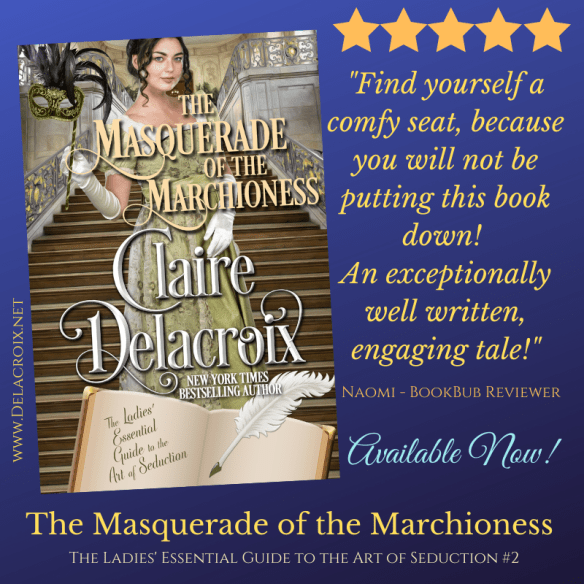

Read The Masquerade of the Marchioness Today!

The Masquerade of the Marchioness, book two of the Ladies’ Essential Guide to the Art of Seduction series of Regency romances, is available today!

Five star review for The Masquerade of the Marchioness, book two of The Ladies' Essential Guide to the Art of Seduction series of Regency romances by Claire Delacroix

The Masquerade of the Marchioness, a Regency romance by Claire Delacroix

She’s not the woman he married…


Philomena Wright, Marchioness of Arlingview, is universally admired for her intellect, good sense and charitable efforts on behalf of widows and orphans. A woman with every advantage, she also has a guilty secret: in truth, she is Philomena’s twin sister, Penelope. Dreading spinsterhood, she attends a masquerade ball in the hope of finding a suitor before admitting the truth—only to encounter a gentleman who stirs her like no other…


Garrett Wright misses the purpose—and the peril—of his work as a spy during the war and is bored with his disguise as a reckless rake. When he agrees to help unveil a jewel thief preying upon London society, he is beguiled by a beauty who awakens a dream—and becomes determined to unveil the truth, whatever the cost. 


When he finds stolen gems in her possession, Garrett fears his lady has a more dangerous secret than her identity. Forced to choose between honor and unexpected love, how will he both fulfill his duty and secure a happy future with the woman who has captured his heart forever?


Five star review for The Masquerade of the Marchioness, book two of The Ladies' Essential Guide to the Art of Seduction series of Regency romances by Claire Delacroix

The Masquerade of the Marchioness is also available in mass market paperback:

New Spanish Christmas Romance Boxed Set in KU

I’m participating in a new multi-author bundle of holiday romances in Spanish, which is enrolled in Kindle Unlimited. The plan is for this bundle to be available for 3 months only, so don’t delay in grabbing your copy of Damas, caballeros y muérdago!

Estoy participando en un nuevo paquete de varios autores de romances navideños en español, que está inscrito en Kindle Unlimited. El plan es que este paquete esté disponible solo durante 3 meses, ¡así que no se demore en hacerse con su copia de Damas, caballeros y muérdago!

Damas, caballeros y muérdago: Colección de romance histórico navideño

Enamórate estas fiestas de una colección de novelas románticas históricas de tema navideño profundamente cautivadoras…

Tierna y sensual, Damas, caballeros y muérdago contiene más de 2000 páginas de novelas románticas históricas de tema navideño. Incluye 6 libros de 6 autoras distintas, muchas de las cuales son autoras de best-sellers del New York Times y USA Today

Ellie St. Clair: Su deseo de Navidad
El mismo deseo navideño ha perseguido a Emily Nicholls durante años: tener una familia propia. Lord Charles Blythe le hace una propuesta. Únase a su familia durante la temporada navideña, haciéndose pasar por su prometida hasta que encuentre a otra para casarse. ¿Hay alguna posibilidad de que sus deseos navideños se hagan realidad?

Lauren Smith: Una Seducción Escandalosa
Una dama se enamora del mejor amigo de su hermano mayor en Navidad y debe seducirlo para ganar su corazón.

Amanda Mariel: El destino me dio un duque
La Navidad trae complicaciones imprevistas para el Duque de Cleburne y Lady Juliet Gale. ¿Se rendirán al destino o lucharán contra él?

Deborah Hale: Su beso bajo el muérdago
Jonathan Frost rescata a su antiguo amor y su hijo de las circunstancias desoladoras en que se hallan y los invita a celebrar las fiestas en su propiedad. ¿Llevará la Navidad a Jonathan y Christabel el valioso regalo de una segunda oportunidad en el amor?

Emmanuelle de Maupassant: La Guía De La Dama Para El Muérdago Y El Caos
Huyendo de un matrimonio no deseado, Úrsula asume la identidad de una profesora de etiqueta y se dirige a un remoto castillo escocés para la temporada navideña, pero su joven pupilo resulta ser más de lo que esperaba.

El ranchero tejano Rye Dalreagh, el heredero de Dunrannoch perdido hace mucho tiempo, ha sido arrojado al abismo. Durante la que debería ser la más alegre de las estaciones, debe elegir una novia, sortear una antigua maldición, evitar ser asesinado y tratar de no enamorarse de su tutora de modales.

Claire Delacroix: La novia blanca como la nieve
El señor de Kinfairlie ha ayudado a sus hermanas, cada una una joya por derecho propio, a encontrar marido. Ahora el propio señor busca casarse y pone sus esperanzas en la novia blanca como la nieve.

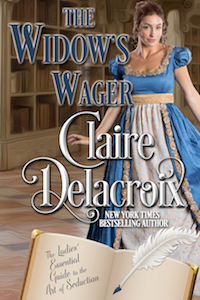
Coming in March – The Widow’s Wager

The Ladies’ Essential Guide to the Art of Seduction continues with The Widow’s Wager, book three of the series, coming in March. Matters become complicated for Mrs. Oliver when the Duke of Haynesdale’s widowed sister seeks out the secrets of her notorious book-in-progress, and the protective duke takes an interest in his sister’s activities.

The Widow's Wager, a Regency romance by Claire Delacroix

She wed once for duty but will only wed again for love…

For as long as she can remember, Eliza North’s heart has been in the possession of her older brother’s friend, Nicholas Emerson. But Nicholas has always been oblivious to Eliza, and when he bought a commission and sailed to war, she wed sensibly instead. Returned to her brother’s house a widow, she meets Lieutenant Emerson again and realizes neither of their feelings have changed. She accepts his request to chaperone his younger sister, Helena, hoping she might win his attention yet, with the assistance of the mysterious Mrs. Oliver and her guide for seduction.

Nicholas Emerson could never aspire to wed the daughter of a duke, especially one so pragmatic as Eliza has always been. That she married for the whimsy love makes him wonder how well he knew Eliza after all. She is still the only woman who captures his attention, but he knows his injuries mean he can never marry. Still, he cannot resist the chance to request Eliza’s assistance with Helena’s second season, and the chance to share her company.

Neither of them anticipate Helena’s wild behavior or their necessary alliance to defend her reputation. Entrusted with the manuscript of Mrs. Oliver’s advice on the seductive arts, Eliza puts its counsel to use, much to Nicholas’ delighted astonishment. How can he refuse the woman he loves, even knowing that he can never ensure her happiness? Caught between honor and love, Nicholas must accept his legacy from the war for this pair to have a future—is Eliza the woman who can heal his wounds forever?

Coming March 21, 2023

Pre-order available at some portals.

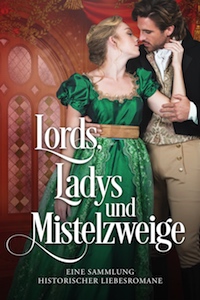
New German Christmas Romance Boxed Set in KU

The German edition of my Christmas medieval romance. The Snow White Bride, is included in this wonderful holiday anthology which is available in Kindle Unlimited.

Verlieben Sie sich zu den Festtagen in eine Sammlung von Romanen rund um Weihnachten, die zum Umfallen schön sind …

Lords, Ladys und Mistelzweige enthält über 3000 Seiten von historischen Liebesromanen rund um Weihnachten, von liebenswert bis sinnlich. Insgesamt sind es 11 Bücher von 11 verschiedenen Autoren, darunter viele Bestsellerautorinnen der New York Times und von USA Today.

Lauren Smith: Eine teuflische Verführung
Eine Frau verliebt sich über Weihnachten in den besten Freund ihres älteren Bruders und muss ihn verführen, um sein Herz zu gewinnen.

Glynnis Campbell Das VERLÖBNIS
Als Sir Noёl de Ware seine Verlobte einfordert– Ysenda, die schönste Erbin der Highlands – ist er sicher, dass sie das beste Weihnachtsgeschenk ist … bis er erfährt, dass das Mädchen, das er geheiratet und in sein Bett geholt hat, nicht die richtige Schwester ist

Ellie St Clair: Ein Duke zu Weihnachten
Eines Abends wird Lionel auf einem Ball ausgerechnet von der Frau verzaubert, die er so lange gemieden hat. Plötzlich ertappt sich der Mann, dem alles gleichgültig zu sein schien, dabei um eine Einladung für die Festtage im Haus von St. James zu bitten. Die Weihnachtszeit bekommt eine gänzlich neue Bedeutung, als er sich aufmacht, um seine zukünftige Frau für sich zu gewinnen.

Amanda Mariel: Wie man einen Halunken küsst
Zwei Freundinnen, ein Missverständnis und die große Liebe für eine Lady.

Brenda Hiatt : Die Weihnachtsbraut
Ein schnelles Umwerben, eine Weihnachtshochzeit…Hollys leben scheint vielversprechend, bis ihre Versuche selbst zur Heldin zu werden in einen fürchterlichen Konflikt der Loyalität endet, der ihre Ehe ruinieren könnte!

Erica Ridley: ES WAR EINMAL EIN HERZOG
Genießen Sie eine lustige Geschichte über eine zweite Chance mit einer alten Jungfer in einem Kontor, einem mürrischen Herzog, der sich Mühe gibt, sich nicht zu verlieben, zauberhaften Nächten in einer romantischen Burg und einer eigensinnigen Ziege. Was könnte da schon schiefgehen? Absolut alles!

Lauren Royal: Das geheime Weihnachtsfest
Weihnachten wurde von der Regierung des Commonwealth verboten – aber das hält Lady
Chrystabel Trevor nicht von ihrer Weihnachtsstimmung ab. Als sie zusammen mit dem gut
aussehenden und interessanten Joseph Ashcroft, Viscount von Tremayne, eingeschneit wird, verwandelt sich das fröhliche Fest in ein Chaos. Kann der Zauber des Weihnachtsfestes zwei
Herzen auch in Zeiten der Angst und Unterdrückung zusammenführen?

Deborah Hale: Ein Kuss unter dem Mistelzweig
Die Weihnachtszeit bringt viele besondere Geschenke, aber nur wenige sind so selten und kostbar wie das Geschenk einer zweiten Chance auf Glück.

Emmanuelle de Maupassant: Wie gaukelt man eine Verlobung vor
Cornelias Heiratsaussichten sind gleich null, da ihr Name mit einem alten Skandal in Verbindung gebracht wird.
Burnell ist genau die Art von gefährlichem Mann, der sie abgeschworen hat – und sich als seine Verlobte auszugeben, kann nur Ärger bedeuten. Oder es macht sie so berüchtigt, dass sie unwiderstehlich wird.
Können sie alle davon überzeugen, bis über beide Ohren ineinander verliebt zu sein?

Claire Delacroix: Die schneeweiße Braut
Der Laird von Kinfairlie hat seinen Schwestern – jede für sich ein Juwel – geholfen, Ehegatten zu finden. Nun wünscht er selbst zu heiraten und setzt seine Hoffnungen auf die schneeweiße Braut.

Sandy Raven: Das Weihnachtsgeschenk
Lady Beverly hat nie das Versprechen vergessen, das ihr Mann ihr gab, als sie heirateten. Er versprach ihr so viele Kinder, wie sie wollte, weil sie als einsames Einzelkind aufgewachsen war. Die Rückkehr ihres Mannes von seinen diplomatischen Pflichten in Übersee wird ihr die Möglichkeit geben, dieses Kind zu empfangen – nur, dass er ihr Bett jetzt meidet.